Ask five parents what "normal" development looks like, and you'll get five different answers. One child speaks early but struggles to sit still. Another climbs everything but takes time with words. That variation can feel confusing, especially between ages two and six, when change happens fast.
Here's the useful way to think about it: early childhood development isn't a straight line. It's more like a series of jumps, pauses, and sudden leaps. Milestones help you notice patterns, not measure perfection.
Let's walk through what typically shows up during these years, without turning it into a checklist.
This is where things shift from babyhood into early childhood.
Children begin asserting themselves. "No" becomes a favourite word. They want to try things on their own, even if they can't quite manage them yet. You'll also notice rapid language growth. Words turn into short phrases. They start naming objects, people, and actions around them.
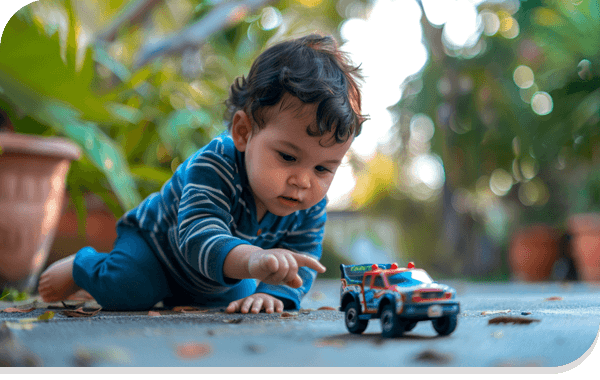
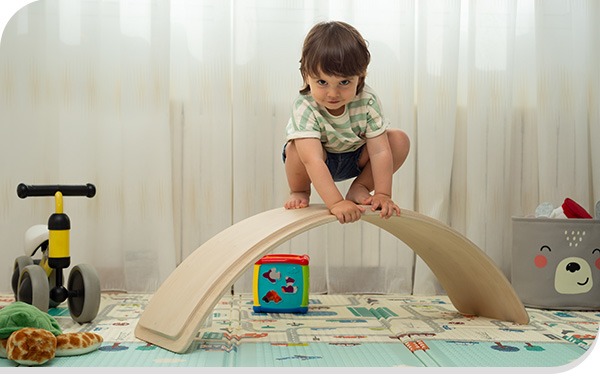
Physically, movement becomes more confident. Running improves. Climbing becomes less cautious. These are early signs of developing fine motor and gross motor skills, even if coordination isn't perfect yet.
Emotionally, this stage can feel intense. Big reactions, quick mood changes, strong attachment. That's part of the process.
If you're tracking milestones for 3 year olds, focus less on exact abilities and more on progress. Are they trying? Are they exploring? That matters more than precision.
Somewhere around this age, curiosity becomes the driving force.
Questions increase. "Why" shows up often, even when answers don't fully land. Children start connecting ideas. They remember routines. They anticipate what comes next.
Socially, they begin engaging more with other children. Not always smoothly, but with clear interest. Sharing is still developing, but awareness of others is stronger.
Activities that support early childhood education often become more visible here. Storytelling, simple games, and guided play start holding attention longer.
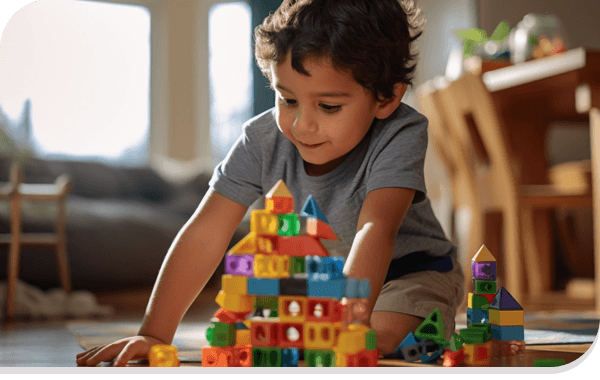
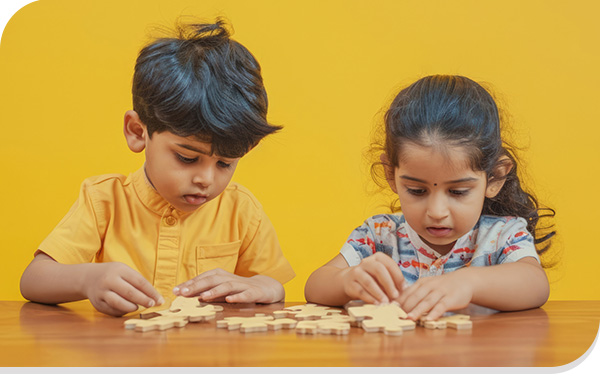
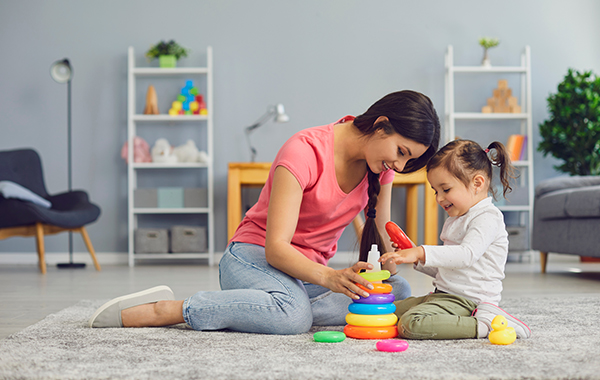
This is also when imagination expands. Pretend play becomes richer. A stick becomes a sword. A box becomes a house. These aren't random behaviours. They're signs of growing cognitive flexibility.
At this stage, children begin responding better to structure.
They understand simple rules. They can follow multi-step instructions, even if they forget occasionally. Attention span increases, especially for activities they enjoy.
If you're observing milestones for 4 year olds, you'll notice clearer communication. Sentences are longer. Ideas are expressed more confidently. They may even start asking more specific questions instead of general ones.
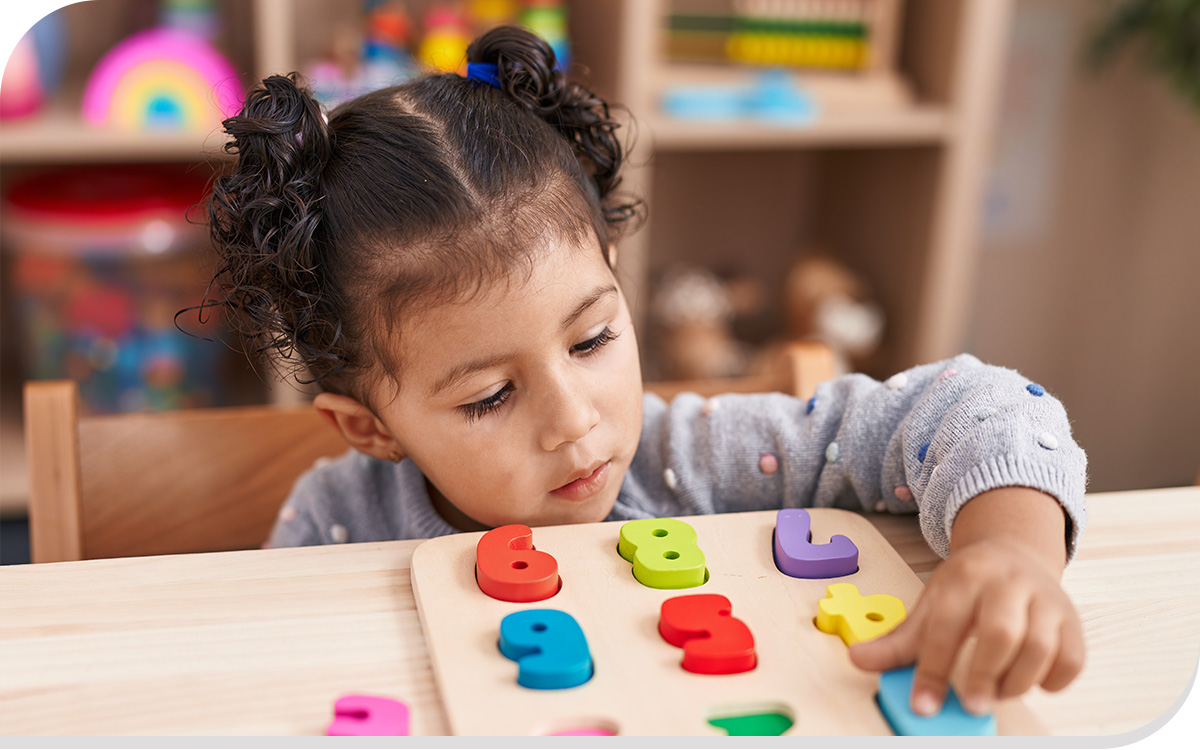
Physically, coordination improves. Drawing becomes more controlled. Cutting with scissors becomes possible. Balance and movement feel more stable.
This is also when friendships start forming in a more meaningful way. Children begin recognising familiar peers and showing preferences.
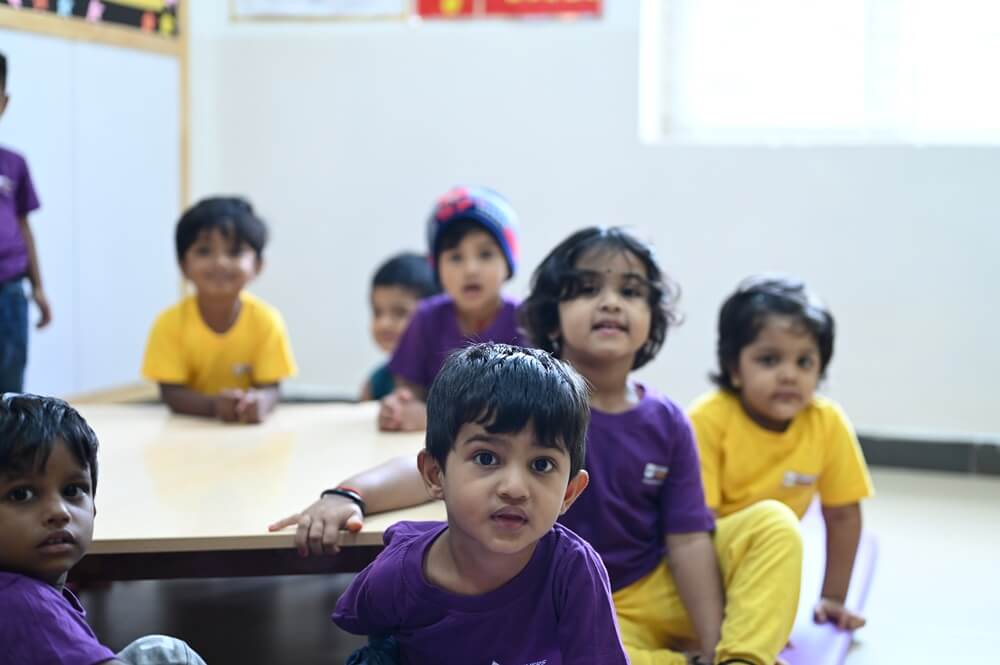
By this point, many children show signs of readiness for more formal learning environments.
They can sit longer during activities. Follow instructions with fewer reminders. Interact better in groups.
The language structure becomes more structured. They create simple narratives, narrate incidents, and articulate ideas coherently. There are improvements in problem-solving, too. They attempt various methods rather than simply quitting.
It corresponds quite well with the preschool development milestones, where skills begin linking with each other, and do not develop separately.
Yet, there are variations even at this stage. Some children have a flair for languages. Some for motor coordination. Some for socializing.
It's easy to compare. Especially when other children seem ahead in certain areas.But comparison rarely tells the full story. A child who speaks early might take longer with coordination. A physically active child might have difficulty focusing.
That's the nature of early childhood development. Growth doesn't happen evenly.
Instead of comparing, observe consistency. Is your child progressing over time? Are they gaining new abilities, even slowly? That's a better indicator.
Variation is common, but there are things that should not go unnoticed. If your baby communicates very little, avoids interacting all the time, or has problems moving without any signs of improvement, you might consider seeking advice.
That does not necessarily mean there is anything wrong. You can just get more help from the experts. It is easier to handle problems when they are dealt with early enough.
You don't need structured lessons to support growth.
Simple actions help:
These everyday interactions often matter more than planned activities.
Many parents look for structured parenting tips, but the most effective ones are often the simplest and most consistent.
Children are responsive to their environment. When placed in an environment where they feel free to explore, they will develop naturally in that environment. This is the reason why the learning environment for children tends to emphasize interaction rather than forceful teaching.
They also learn from such play through repeated actions. In addition, they learn to follow their own pace rather than the pace imposed on them by others.
Between ages two and six, children change quickly, but not predictably. Some days feel like progress. Others feel like a regression. Both are part of the process.
If you keep your focus on steady growth rather than perfect timing, early childhood development becomes easier to understand.
For families exploring supportive spaces, Beginners World Preschool offers age-appropriate environments designed to match different stages of growth. You can explore more about their approach through their our programs section, which focuses on gradual, child-friendly development.
Watch your child. Notice patterns. Support curiosity. The rest tends to follow.