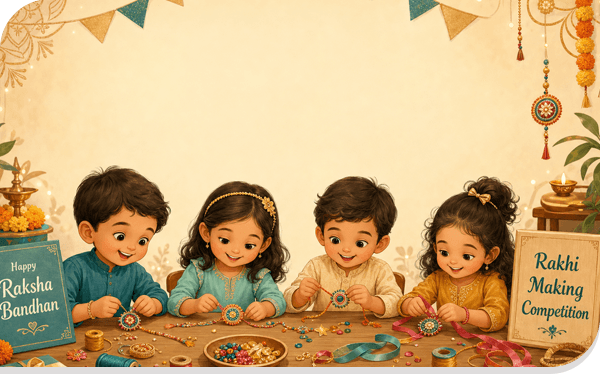
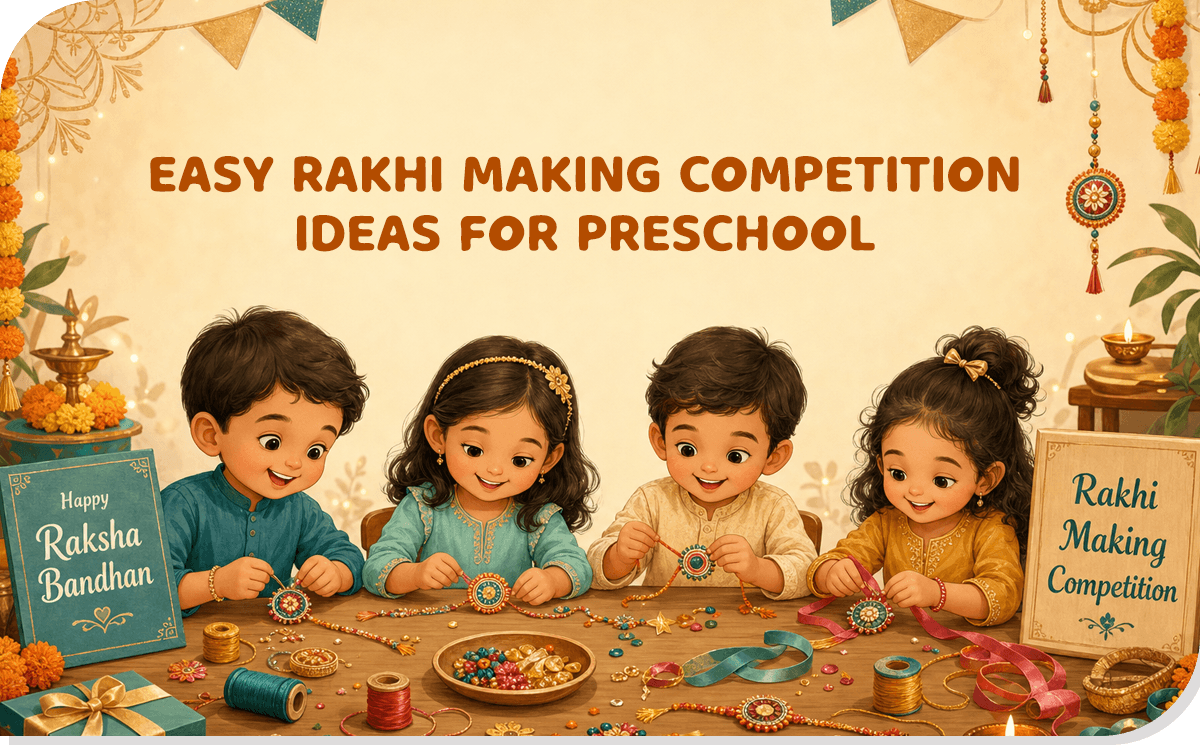
Give a group of preschoolers some colourful thread, paper, stickers, and beads, and you can expect two things: lots of excitement and a table that looks completely different by the end. Rakhi-making competitions can be wonderfully messy at this age, and that is not a bad thing.
The aim isn't to find the most beautiful rakhi. Preschool children are still learning how to use their hands, make choices, and explain what they have created. A simple competition gives them a chance to do all three while enjoying a familiar festival.
For teachers, the trick is to keep the rules light. These Competition Ideas should encourage participation rather than make children worry about winning.
A preschool rakhi activity doesn't need a long list of instructions.
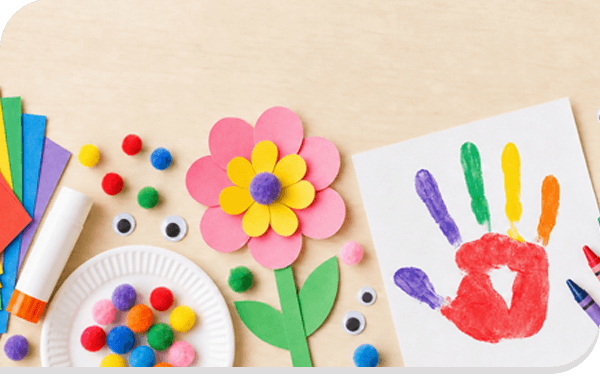
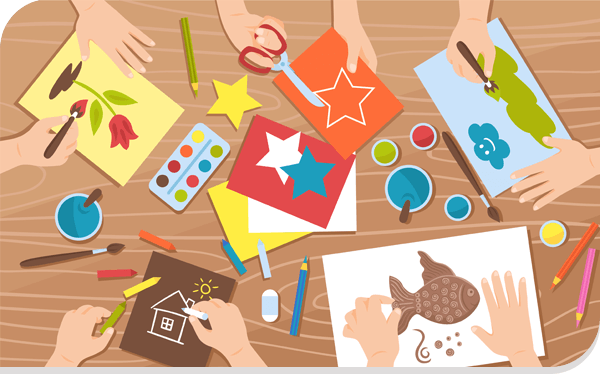
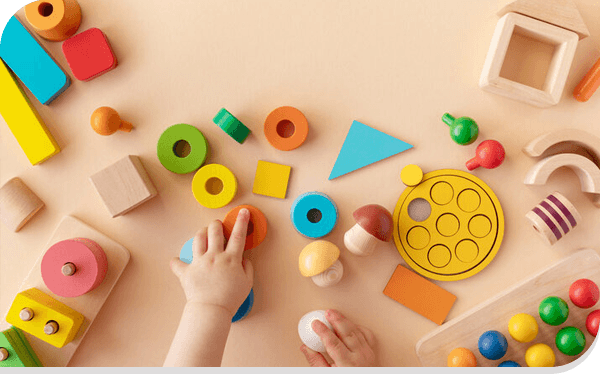
Prepare a few safe materials before the children arrive. Keep large beads, colourful ribbons, paper shapes, stickers, wool, foam pieces, and washable glue within easy reach. Avoid tiny pieces if the children are very young.
You can give everyone the same basic materials, or allow children to choose from a small selection. The second option often produces more interesting results because every child makes different choices.
That's where art and craft for preschoolers becomes especially enjoyable. One child may create a very simple rakhi with two colours. Another may cover theirs with stars, flowers, and stickers.
Neither is better.
Give children threads in different colours and ask them to choose one or two for their rakhi.
They can decorate the centre with a paper circle, sticker, or foam shape. While the children are working on them, the teachers can discuss the colours, which turns them into simple colour recognition activities, but without them seeming like lessons.
The completed rakhis can then be displayed altogether.
Cut a few simple flower shapes from coloured paper before the competition begins.
The children can select their favourite flower and decorate it using crayons, stickers, or paper circles. When done, the teacher can attach the flower to either a ribbon or strong thread.
Such paper craft ideas are not difficult to make and do not involve costly materials.
If the weather allows, collect a few safe, dry leaves before the activity.
Children can use leaf shapes as inspiration for their rakhi design. They might draw leaves on paper, create paper petals, or decorate a cardboard circle with natural colours.
The finished designs don't need to look realistic. Let children decide what their rakhi should look like.
This one is particularly useful for younger children.
Place large stickers, coloured paper circles, ribbons, and foam shapes on each table. Children can arrange the pieces on a thick paper base and create their own rakhi design.
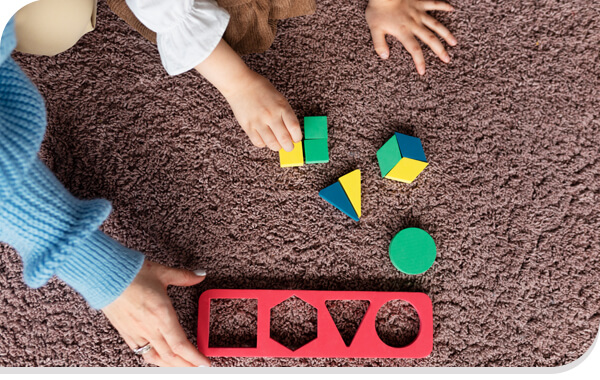
There is very little preparation, but children get plenty of opportunities to pick up, place, press, and arrange materials. These movements become useful fine motor activities while they are busy creating.
Save clean cardboard packaging, old greeting cards, paper bags, and leftover ribbons.
Cut the cardboard into small circles or other simple shapes. Children can decorate them using whatever recycled materials are available.
This competition can also become a small conversation about reusing things instead of throwing them away. Keep the explanation short. Preschoolers learn more when they are actually doing something.
Cut a small cardboard circle and create a simple frame in the centre. Children can decorate the border with paper flowers, stickers, or colourful shapes.
After the activity, place a small sibling photo inside. It becomes both a rakhi-themed craft and a sweet little keepsake for the family.
Not every child will want to glue beads or handle thread.
Some may prefer drawing. Others may want to stick shapes or arrange colours. A few may simply watch their classmates before deciding what they want to make.
That's completely normal.
Good preschool art activities leave enough room for children to participate at their own comfort level. The goal is not to make every child work at exactly the same speed.
This is probably the most important part of a preschool competition.
Avoid choosing only one winner based on appearance. Instead, create small categories such as:
Most Colourful Rakhi
Most Creative Design
Best Use of Materials
Most Cheerful Rakhi
Little Artist Award
You can also give every child a small certificate or sticker.
This keeps the atmosphere friendly and prevents a child from feeling that their work wasn't good enough.
Once everyone has finished, give children a chance to show their creations.
Ask simple questions.
"What colours did you choose?"
"Who will you give this to?"
"What is your favourite part?"
Their answers may be short, funny, or completely unexpected. Let them speak without correcting every word.
These small conversations turn the craft into one of many useful early childhood activities, because children are not only making something. They are also explaining a choice and listening to others.
Keep the competition short. For preschoolers, 20 to 30 minutes is usually enough for a simple craft.
Prepare the materials beforehand and use child-safe supplies. Adults should handle cutting, tying, or anything that requires sharper tools.
Most importantly, don't compare children's work in front of them. Their rakhis will look different because their ideas are different.
And that's exactly what you want.
A rakhi-making competition can be much more than a festive classroom activity. It gives children a chance to choose colours, work with their hands, share materials, and proudly show something they created themselves.
Competition ideas that work well are those which children enjoy doing, regardless of whether they receive the award.
At Beginners World Preschool, such celebrations bring together all these three aspects of creativity, culture and fun. All that would be required is a bit of thread, some coloured paper and plenty of imagination of the little creative minds.