Raksha Bandhan can look very different when little children are involved. There may be more glitter on the table than on the rakhi, a few crooked drawings, and plenty of questions about who gets to wear what. That is part of the fun.
For preschoolers, the idea behind Celebrate Raksha Bandhan is simple enough. The festival is less about following every tradition perfectly and more about spending a warm day with family. When children help make a rakhi, decorate a card, or sit beside a sibling during the celebration, they begin connecting the festival with love and togetherness. There is no need to make the occasion complicated.
Before bringing out the craft supplies, talk to children about the festival.
You might ask, "Who do you like spending time with at home?" or "How do you help your brother or sister?" Their answers can be surprisingly sweet. One child may talk about sharing toys, while another may mention helping with snacks.
This is a gentle way to explain why we celebrate Raksha Bandhan without turning the conversation into a history lesson. Keep the words simple and let children ask questions. They do not need to remember every detail. Understanding that the festival celebrates a special bond is enough at this age.
A homemade rakhi doesn't need to look like the ones in a shop.
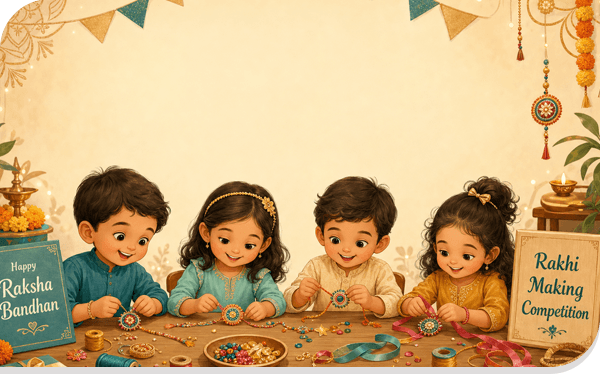
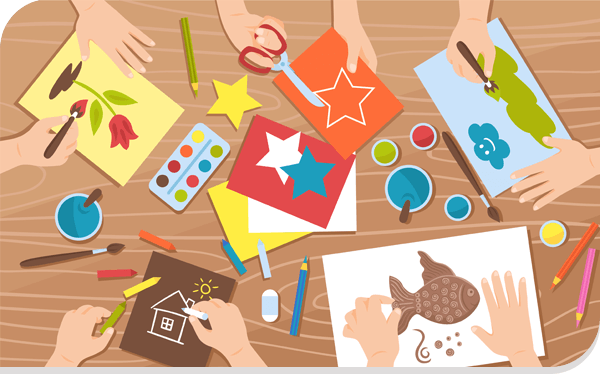
Give children a thick thread, colourful paper, ribbons, large beads, or stickers. Adults can handle anything that needs cutting or tying, while children can choose colours and arrange the decorations.
Some children will carefully place every piece. Others may decide that three different colours look better than one. Let them make that choice.
The activity naturally becomes art and craft for preschoolers, while the child also gets the satisfaction of making something meant for another person.
Drawing can become part of the celebration too.
Give children a sheet of paper and ask them to draw themselves with a sibling, cousin, parent, or another family member they feel close to. They can add flowers, balloons, a rakhi, or anything else they imagine.
A simple rakshabandhan drawing can lead to a lovely conversation. Ask who is in the picture and what everyone is doing. Don't worry if the people have enormous heads or tiny hands. At this age, the story behind the picture matters more than its appearance.
A small card can become a very personal gift.
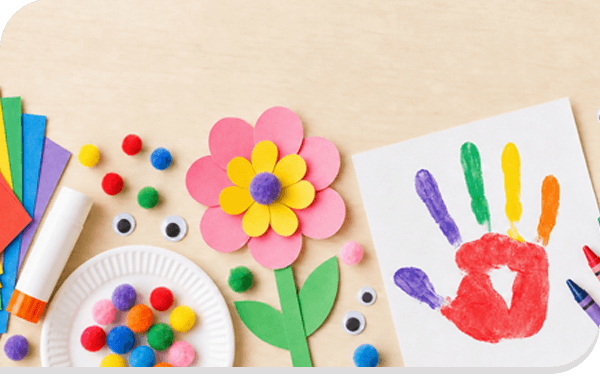
Fold a sheet of coloured paper and let children decorate the front with stickers, drawings, fingerprints, or simple shapes. Inside, an adult can write the child's words if they are not writing independently yet.
These handmade greeting cards are even more special if the children themselves decide what is put on them. It can be just the words "I love you", or the drawing made by the child himself.
Even five minutes of discussion is sufficient for the children to learn something about kindness, emotions, and relationships. These are natural ways of social emotional learning.
Take several familiar things and put them in a basket. Ask children to take one of the things and come up with how they can share it with others. Perhaps a toy car, a set of paints, or even a pretend piece of cake.
The answers don't have to be serious. Children may come up with funny ideas. What matters is that they begin thinking about another person's feelings and needs.
This is also a useful way to connect the festival with everyday behaviour.
Preschoolers rarely want to sit still for an entire celebration.
After the craft session, play a simple music game. Children can walk around the room while music plays and stop when it pauses. When they stop, ask them to give a pretend high-five to a friend or say something kind.
Such fine motor activities are not the only way children learn through play. Movement, conversation, and shared games also help them participate fully in a celebration.
Festivals are a wonderful opportunity to introduce children to traditions, but there is no need to overload them with information.
Show them a rakhi. Talk about what it represents. Let them watch a family member tie one. Explain that families may celebrate differently, and that's okay.
The aim is to help children feel connected to the occasion, not to test how much they can remember.
A preschool celebration can include a small craft table, a story corner, music, and a family-themed drawing session. Children can also make colourful paper decorations for the classroom.
Simple, easy paper crafts work especially well because they need very little preparation. Paper flowers, tiny envelopes, paper bracelets, and decorated circles can all become part of the day's display.
These kinds of nursery learning activities also give children chances to practise choosing, creating, sharing materials, and talking with friends.
The best part of Raksha Bandhan doesn't have to be the decoration or the perfect photograph.
It might be a child carefully tying a rakhi with an adult's help. It might be two siblings laughing because the rakhi ended up on the wrong wrist. It might be a handmade card that is covered in too many stickers.
Those are the moments children remember.
The festival also supports early childhood development because children experience affection, family connection, communication, and shared traditions through real interactions rather than explanations alone.
When you celebrate Raksha Bandhan with preschoolers, keep the day simple enough for them to enjoy. Give them something to make, someone to share it with, and enough freedom to participate in their own way.
Beginners World Preschool has an environment where festivals become a chance for the children to explore their cultural heritage through storytelling, arts and craft activities, conversation, and participation. Children participate actively in the events, instead of just being spectators, thus making the festival an event that they can understand, enjoy, and remember.