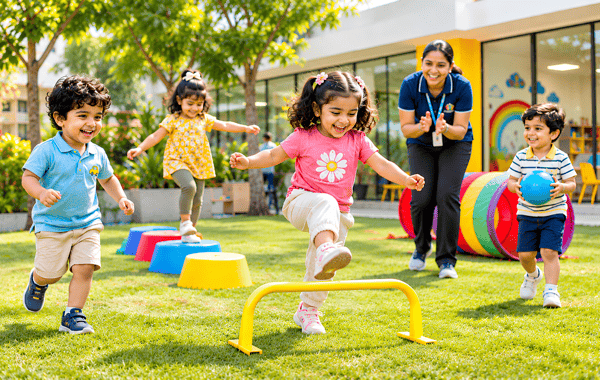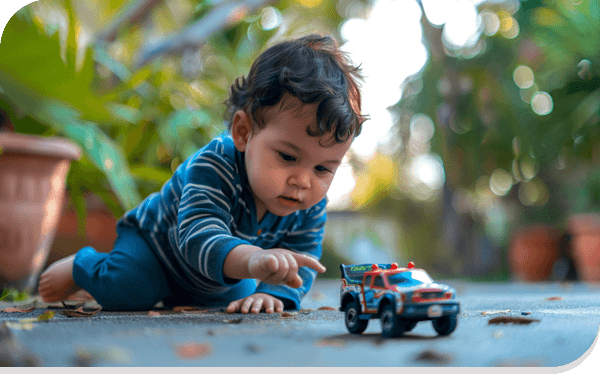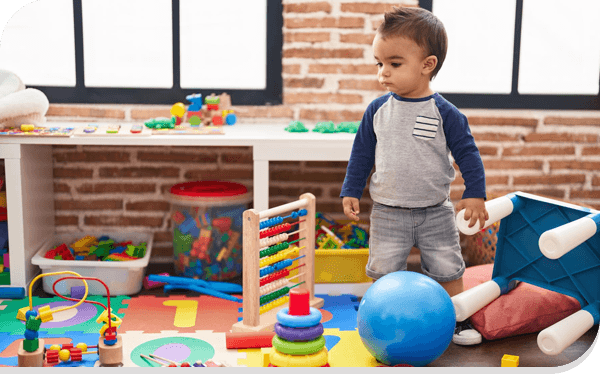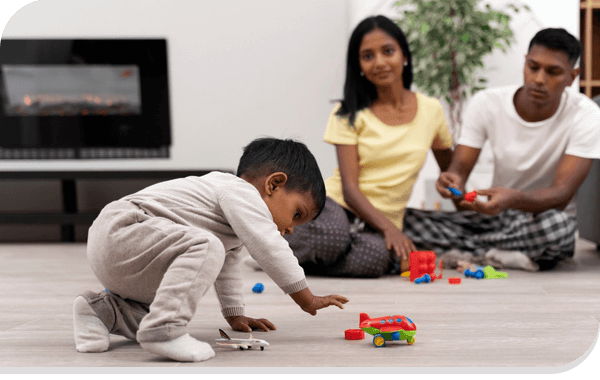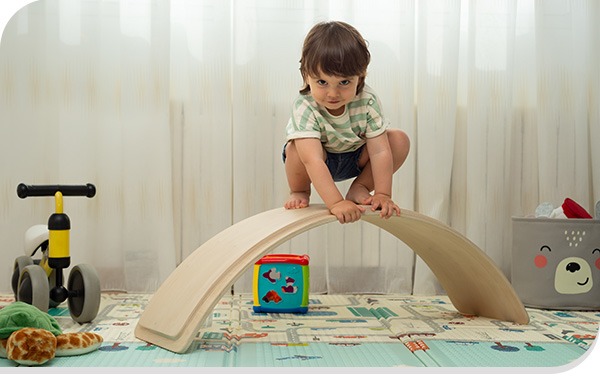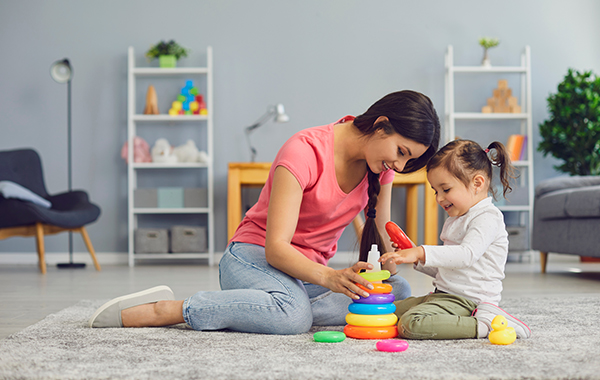
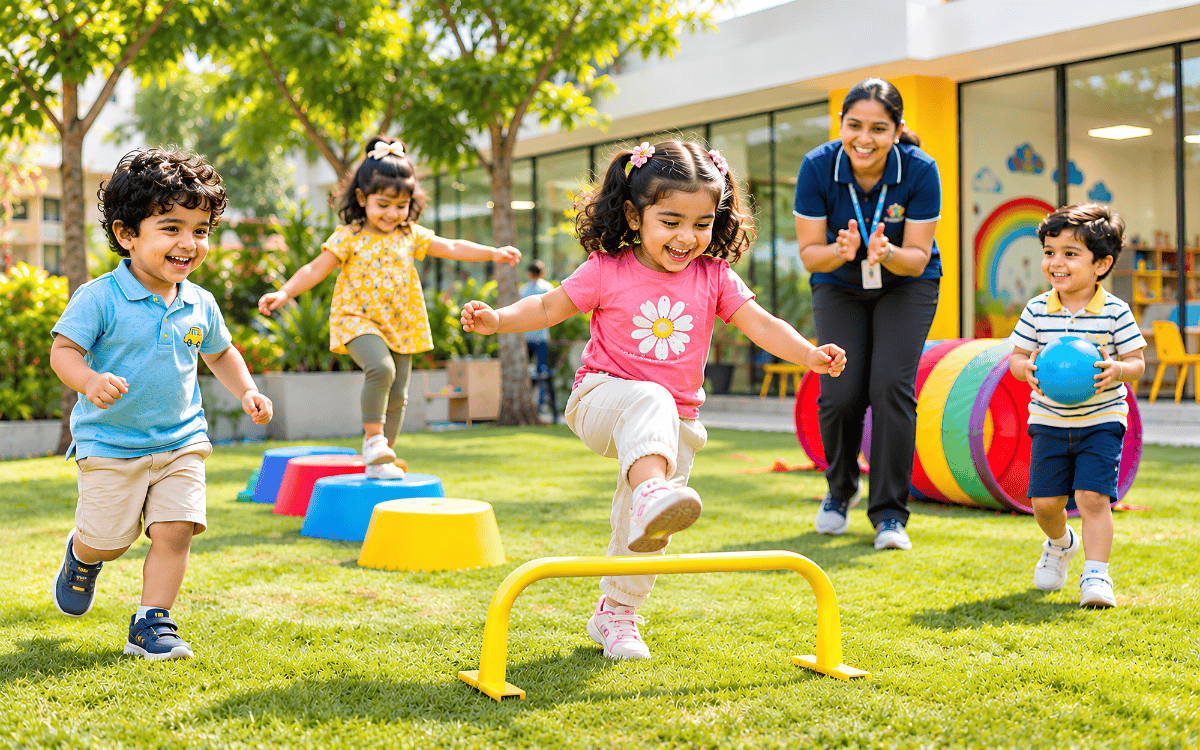
Every jump, run, stretch and playful movement helps your preschooler learn something new. Whether your child is hopping across the living room or playing catch in the garden, these little moments of movement support physical development, coordination and confidence.
Gross motor skills involve using the body's larger muscles to perform everyday movements such as walking, running, jumping, balancing and climbing. For preschoolers, developing these skills is an important part of growing more independent and becoming comfortable with physical activities.
The good news? You don't need expensive equipment or complicated exercises to help your child.
In this guide, we've put together 20 fun preschool activities for gross motor skills that parents and teachers can introduce through everyday play.
At Beginners World Preschool & Daycare, we believe children learn best when they are encouraged to move, explore and discover through enjoyable, age-appropriate experiences.
Gross motor skills are movements that involve large muscle groups in the arms, legs and body. They help children perform activities such as running across a playground, climbing stairs, kicking a ball and maintaining balance.
Some important gross motor skills for preschoolers include:
For example, when a preschooler jumps over a small obstacle, they practise balance, coordination and judging distance at the same time.
These skills develop gradually, and every child progresses at their own pace.
Physical activity is about much more than keeping children occupied.
Regular opportunities for active play can help preschoolers:
According to the Centers for Disease Control and Prevention (CDC), children aged 3–5 should be physically active throughout the day, with adults encouraging a variety of enjoyable activities.
This is why incorporating gross motor skills activities into daily preschool routines can be so valuable.
Here are 20 simple, engaging activities that can help preschoolers improve balance, coordination, movement and confidence.
Skills developed: Coordination, body awareness and muscle strength.
Turn an ordinary walk into an exciting animal adventure!
Ask your child to imitate different animals:
Parent tip: Play a guessing game where one person acts like an animal and the others identify it.
Animal walks are excellent indoor gross motor activities for preschoolers because they require very little equipment.
Skills developed: Balance, coordination and motor planning.
Create a mini obstacle course using cushions, floor markers, tunnels and soft play equipment.
Encourage your preschooler to step over obstacles, crawl through a tunnel, walk around objects and reach the finish line.
Start with three simple challenges and gradually introduce more movements.
Parent tip: Give your obstacle course a fun name, such as "Jungle Adventure" or "Little Explorer Challenge."
Skills developed: Balance, jumping and spatial awareness.
Hopscotch is a classic gross motor activity for preschoolers.
Draw squares using pavement chalk or create an indoor version with floor tape. Encourage children to jump between squares using both feet, or one foot when they're ready.
You can also add numbers or colours to combine movement with early learning.
Parent tip: Focus on participation rather than completing the game perfectly.
Skills developed: Balance, listening and movement control.
Put on your child's favourite music and encourage them to dance freely.
When the music stops, everyone must freeze!
Children practise moving their bodies, stopping safely and maintaining different positions.
For more variety, ask them to freeze like a superhero, tree or animal.
Parent tip: Let children choose the music and invent their own dance movements.
Skills developed: Hand-eye coordination, reaching and body control.
Blow up a balloon and ask your preschooler to gently tap it into the air.
The challenge is to keep it from touching the ground.
Children can play individually or take turns with a parent or teacher.
Parent tip: Use a lightweight beach ball instead if you prefer to avoid balloons. Keep balloons and broken pieces away from young children because of choking risks.
Skills developed: Balance, concentration and posture.
Place a strip of painter's tape on the floor to create a pretend balance beam.
Ask your preschooler to walk slowly along the line.
Once they feel comfortable, introduce variations such as walking sideways or carrying a soft toy.
Parent tip: Create curved or zigzag lines to make the challenge more interesting.
Skills developed: Hand-eye coordination, timing and arm movement.
Start with a large, lightweight ball and stand a short distance from your child.
Practise rolling the ball before progressing to gentle underhand throws and catches.
As your child becomes more comfortable, gradually increase the distance.
Parent tip: Celebrate attempts as much as successful catches. Developing coordination takes practice.
Skills developed: Listening, coordination and body awareness.
Simon Says turns simple physical movements into a fun listening challenge.
Try instructions such as:
Children need to listen carefully while performing different actions.
Parent tip: Begin with simple instructions and gradually add movement sequences.
Skills developed: Leg strength, jumping and coordination.
Arrange flat floor markers or low, soft obstacles on a non-slip surface.
Encourage your child to jump from one marker to another, landing with both feet.
You can pretend the floor is a river and the markers are stepping stones.
Parent tip: Keep obstacles low and appropriate to your child's abilities. Avoid slippery surfaces and high jumps.
Skills developed: Coordination, imitation and social interaction.
Choose a leader who performs different physical movements while everyone else follows.
The leader might march, tiptoe, stretch, bend or move sideways.
Allow each child to take a turn leading the activity.
Parent tip: This game is particularly useful for small groups because children can practise movement while interacting with others.
Rainy days or limited outdoor space should not prevent children from enjoying active play.
These activities can be introduced in safe indoor spaces with appropriate adult supervision.
Skills developed: Movement planning, coordination and spatial awareness.
Hide picture clues or colourful objects in different safe locations around the room.
Encourage your child to walk, crawl, reach or bend to find each clue.
For extra fun, include movement instructions such as "Take five giant steps towards the treasure."
This activity combines physical movement with curiosity and problem-solving.
Skills developed: Flexibility, balance and body awareness.
Introduce simple, child-friendly yoga positions inspired by nature.
Try:
Keep sessions short and playful without forcing children into uncomfortable positions.
At Beginners World, yoga is also included among the learning experiences described in our Senior Kindergarten programme.
Skills developed: Creativity, coordination and movement control.
Ask your child to imagine different weather conditions and express them through movement.
For example:
This imaginative activity encourages preschoolers to experiment with different speeds and body positions.
Skills developed: Balance, coordination and careful stepping.
Place firm, non-slip floor spots or low foam pads on a clear floor.
Ask your child to move from one stepping stone to another without stepping into the imaginary water.
Change the distance between markers according to their comfort and ability.
Parent tip: Avoid unstable cushions, elevated furniture or surfaces that could slide.
Skills developed: Rhythm, coordination and listening.
Songs with actions offer a simple way to introduce movement into daily routines.
Choose songs that encourage clapping, marching, bending, stretching and turning.
Children can follow the actions or invent their own.
Music and movement are also part of the activity-based learning experiences highlighted at Beginners World.
Outdoor play provides opportunities for children to experience different movements, distances and environments.
The following activities can be adapted for playgrounds, gardens and suitable preschool outdoor areas.
Skills developed: Running coordination, balance and movement control.
Choose a safe, open area where children can run without obstacles.
Call out "Go" to begin moving and "Stop" when children should slow down and stand still.
You can introduce different movement commands such as walking, marching or tiptoeing.
Parent tip: Avoid sudden direction changes in crowded spaces.
Skills developed: Muscle strength, coordination and body awareness.
Age-appropriate playground structures can give children opportunities to practise climbing, stepping and balancing.
Encourage your preschooler to explore equipment suitable for their size and abilities.
Stay close, supervise actively and follow playground safety guidance.
Parent tip: Let children progress gradually instead of encouraging them to climb higher before they feel ready.
Skills developed: Leg coordination, balance and spatial awareness.
Create a small goal using cones or floor markers.
Encourage your child to kick a soft ball towards the goal.
Begin at a short distance and gradually move farther away as their confidence grows.
You can also make the game more engaging by using coloured targets.
Skills developed: Walking endurance, balance and awareness of surroundings.
Turn an ordinary outdoor walk into a movement adventure.
Encourage your child to:
Nature walks combine gentle physical movement with curiosity about the environment.
Skills developed: Coordination, confidence, teamwork and physical endurance.
Organise a simple sports day with several short activities, such as:
Keep the focus on participation, encouragement and enjoyment rather than competition.
Parent tip: Allow children to choose their favourite activities and take rest breaks whenever needed.
The right activity depends on the child's developmental stage, interests and comfort level.
| Age group | Suggested activities | Main focus |
|---|---|---|
| 2–3 years | Animal walks, action songs, ball rolling | Basic movements and body awareness |
| 3–4 years | Obstacle courses, dancing, stepping stones | Balance and coordination |
| 4–5 years | Hopscotch, catching games, Simon Says | Movement planning and control |
| 5–6 years | Mini sports day, yoga, ball games | More complex coordination and teamwork |
These are general suggestions, not strict developmental milestones. Activities should always be adapted to each child's abilities.
At Beginners World, we believe that childhood should be filled with opportunities to play, move, imagine and grow.
Our approach to preschool education focuses on helping children develop through meaningful, age-appropriate experiences rather than limiting learning to books and classroom instruction.
Our child-centred educational approach encourages children to explore their environment through play and hands-on activities.
Movement-based experiences create opportunities for physical development while helping children enjoy their early learning journey.
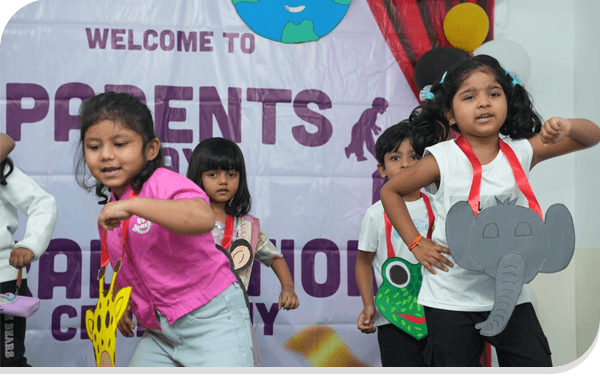
Music and movement sessions are among the activities offered at Beginners World.
These experiences encourage children to express themselves, respond to rhythms and enjoy different types of body movement.
Our preschool programmes combine structured learning with opportunities for free play.
Our published facilities include outdoor play areas, child-friendly infrastructure and indoor school gym facilities, supporting opportunities for active exploration.
Children need different kinds of support as they grow.
Our preschool programmes are designed for different stages of early childhood, including Playgroup, Nursery, Junior Kindergarten and Senior Kindergarten.
The emphasis remains on helping children learn at their own pace through activities suited to their age and development.
Movement activities offer more than physical benefits.
When children try a new game, participate in group play or complete a simple challenge, they also get opportunities to practise communication, persistence, cooperation and independence.
At Beginners World, our commitment is to create a supportive environment where every child feels encouraged to participate, explore and develop confidence.
You don't need a strict exercise schedule to encourage healthy movement.
Small changes to everyday routines can create more opportunities for active play.
If you have concerns about your child's movement or physical development, speak with a qualified paediatrician or relevant healthcare professional.
Some popular gross motor activities for preschoolers include animal walks, hopscotch, obstacle courses, dancing, ball games, balancing exercises and playground activities. These help children practise coordination, balance and movement through enjoyable play.
Dance and Freeze, Simon Says, animal walks, indoor obstacle courses, action songs and floor-line balancing are useful indoor activities. They can be adapted to limited spaces using simple materials and appropriate supervision.
Parents can encourage regular active play through walking, running, jumping, throwing, catching and balancing games. Providing a variety of age-appropriate activities and allowing children to progress at their own pace can help support physical development.
Gross motor skills involve larger muscles used for movements such as running, jumping and climbing. Fine motor skills involve smaller, more precise movements, such as holding a crayon, turning pages or manipulating small objects. Both are important parts of early childhood development.
Preschools can provide opportunities for movement through supervised indoor and outdoor play, music, physical games and age-appropriate group activities. These experiences allow children to practise physical skills while interacting with their peers and teachers.
Children aged 3–5 should be physically active throughout the day, according to CDC recommendations. Parents and teachers can encourage this through varied, enjoyable activities instead of relying on one long exercise session.
Children grow through movement, imagination, interaction and discovery. Whether they're learning to balance, jumping for the first time or participating in a group game, every small experience can contribute to their development.
At Beginners World Preschool & Daycare, we believe every child deserves the freedom to explore, enjoy childhood and develop at their own pace.
Our play-based educational approach brings together physical, social, emotional and cognitive learning experiences to support a well-rounded early childhood journey.
Looking for a preschool that encourages learning through play?
Explore Beginners World Preschool Programmes or enquire about preschool admissions to find the right beginning for your little one.
Because every great beginning deserves a world of possibilities.